
CONSTAR INDUSTRY SRL – Electrical installations company from Târgoviște, Dâmbovița
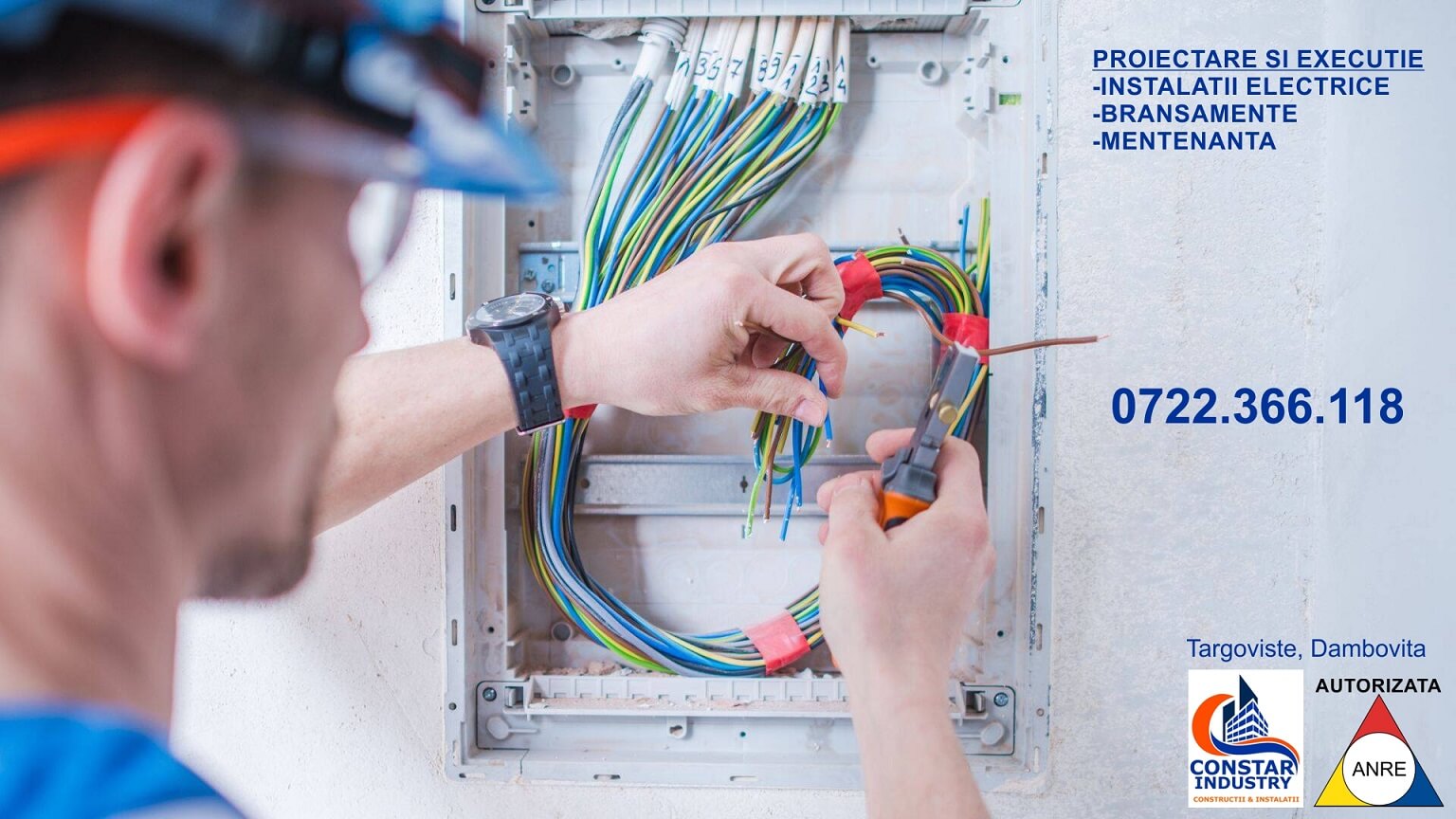
Autorized by ANRE company, we are at your disposal for the design and execution of low-voltage electrical installations. We promptly and professionally carry out our services at fair prices:
- Interior and exterior electrical installations
- Overhead and underground connections
- Electrical installation maintenance (PRAM ground socket checks, portable equipment testing, cable and panel thermography, etc.)
An electrical installation carried out by unauthorized individuals can cause material damage and human casualties! Don’t risk thinking you’re saving money when, at the same price, you can work with an authorized company that offers you a warranty for the work!
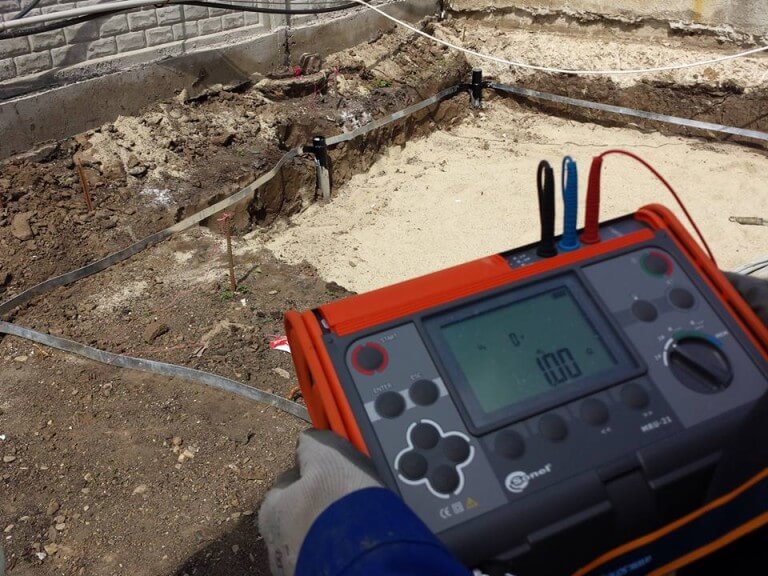
What do PRAM checks mean and at what intervals are they performed?
PRAM = Protections through Relays, Automation, and Measurements
We are authorized to issue PRAM reports/certificates: checking the ground socket’s insulation resistance, verifying the continuity of the protective earth conductor for grounded outlets. We offer a free alert service when the periodic PRAM inspection expires.
The purpose of PRAM checks: Preventive measures to limit the effects of electric shocks, fires, or damage to electrical equipment. Required for inspections by ITM (Territorial Labor Inspectorate), ISU (Emergency Situations Inspectorate), Insurance Companies, Annual ISO Audits, etc.
Attention!: According to Law 319/2006, Chapter IX, Article 39, paragraph 9, points f) and g), the absence of the PRAM certificate results in a fine ranging from 5,000 to 10,000 lei.
The periodic inspection of the grounding socket resistance is necessary because all installations deteriorate due to a number of factors such as: circuit overloading, equipment wear and tear, corrosion, insulation aging, etc. It is recommended that this inspection be performed either once a year or twice a year, specifically once during winter (frozen ground) and once during summer (dry ground, drought), as these conditions represent the extremes. Based on these two measurements, it can be determined whether the ground socket is defective and in need of improvement.
The inspection should be carried out in the following order: ground sockets, electrical panels, followed by 230V and 400V outlets. Simultaneously, the metal casings of electrical equipment at each power point should be checked. In practice, an audit is conducted to ensure electrical safety in the workplace.
CONTACT AN EXPERT AT CONSTAR INDUSTRY AND LET US KNOW HOW WE CAN ASSIST YOU
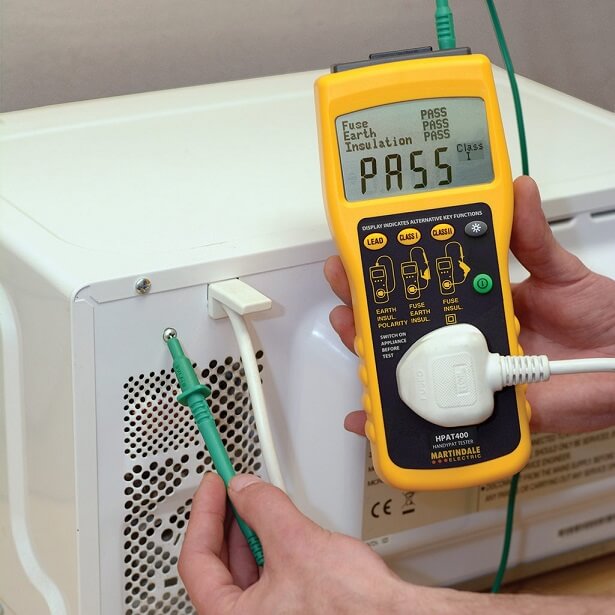
SUNA ACUMWhat does PAT (Portable Appliance Testing) mean and at what intervals is it done?
Often there are premises to find appliances in hazardous conditions. The risks to employees, employers, and businesses are very high, and we are not only talking about the risk of electric shock but also the risk of fire caused by defects in these appliances. Examples of electrical appliances covered include: portable or benchtop electric drills, angle grinders, electric saws, soldering irons, welding machines, computers, printers, copiers, and essentially all electrical appliances powered by a plug and cord.
By ‘portable appliance,’ we mean an appliance with a weight of less than 18 kilograms that is intended to be moved in operation or not, from one place to another. Examples of such appliances that can be easily moved from one place to another include vacuum cleaners, toasters, food mixers, etc.
Mobile equipment refers to equipment that is under 18 kg or less and is not fixed; it may be equipped with wheels or other means to facilitate movement by the operator as needed to perform various operations.
Handheld appliances are portable equipment intended to be held in hand during normal use (e.g., hairdryer, soldering iron).
Stationary appliances/equipment have a mass greater than 18 kg and are not equipped with a carrying handle (e.g., refrigerator, washing machines).
Fixed appliances/equipment are those devices or appliances that are affixed to a support or in a specific location, with many of these devices primarily powered by a fixed electrical cable (e.g., bathroom hand drying installations).
Information technology equipment includes electrical equipment such as network-powered computers, telecommunications equipment, and other electronic equipment such as printers, photocopiers, fax machines, and monitors, to name a few.
Portable Appliance Testing (PAT) is a method for testing electrical equipment to ensure that they are safe and properly maintained. Often, we read in newspapers and see in news presentations that there have been loss of lives, homes or commercial spaces destroyed due to electrical faults.
Types of Tests:
- Non-load operational tests;
- Protective earth conductor testing;
- Insulation resistance testing;
- Leakage current testing;
- Voltage, current, and power measurements;
- Testing of IEC power cables and extensions.
PAT Testing is an important part of any low voltage electrical equipment safety and health policy, as per Government Decision no. 457/2003, to ensure the safety of users of low voltage electrical equipment. This provision is fulfilled only through periodic PAT (portable appliance testing) checks, and these checks need to be regulated through an internal procedure. The code of good practice recommends that the testing frequency should be based not only on the type of equipment but also on the equipment class, location, environment, or type of activity in which the equipment is used. Handheld appliances, for example, are much more susceptible to damage than fixed appliances. Starting from these data, taking into account the requirements of Regulation I7/2011 and our own practical experience, we will be able to establish the frequency of inspections and periodic checks.
Legal Basis for PAT Testing:
There are regulations, both in Law no. 319/2006 – Labor Health and Safety Law, which obliges both the employer and the employees and their representatives to ensure the safety of all persons using the workplace, such as:
- Each employer must make an adequate assessment of the risks to the health and safety of his employees to which they are exposed at the workplace;
- Each employer must ensure that work equipment is constructed or adapted so as to be suitable for the purpose for which it is provided;
- To eliminate the risks arising from electrical energy by using work equipment, machinery, equipment, and devices but also to be maintained so as to prevent the risk of electrocution.
Periodic Checks:
- Every 6 months for occasionally operated electrical tools;
- Every 4 months for frequently operated electrical tools;
- Every 2 months for continuously operated electrical tools;
- After every event that may affect operation.
Standards for Electrical Equipment Safety:
- DIN VDE 0701-0702 (VDE 0701-0702): 2008-06: Inspection after repair, modification of electrical equipment – periodic testing tools for electrical equipment;
- DIN VDE 0751:2001: Initial and periodic tests of medical electrical systems and equipment;
- SR EN 60745-1:2003: Hand-held electric tools. Safety. Part 1: General requirements;
- SR EN 60950:2002: Information technology equipment. Security;
- EN 60990:2002: Measurement methods for touch currents and protective conductor currents;
- EN 60353-1: Safety of electrical appliances for household and similar purposes. General requirements;
- EN 61029: Safety of transportable motor-operated electric tools. General requirements;
- SR EN 60601-1-1-2003: Electromedical equipment. Part 1-1: General safety requirements. Safety requirements for electromedical systems;
- EN 60974-4: 2009: Arc welding equipment. Part 4: Inspection and functional testing;
- STAS 2612-87: Protection against electrocution. Admissible limits;
- I7-2011 chap. 8 Normative for the design, execution, and operation of electrical installations related to buildings – Inspection and maintenance of electrical installations.
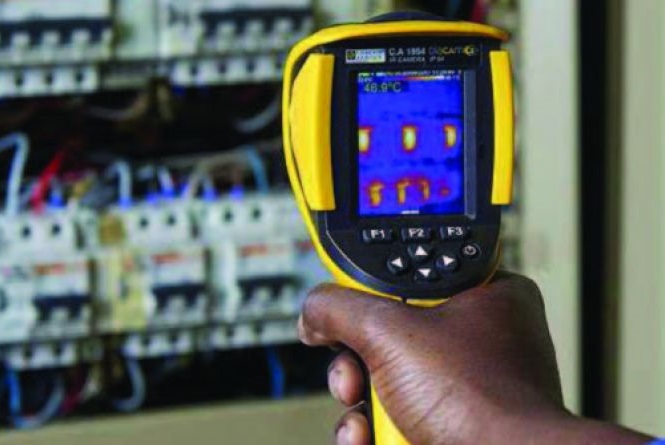
What does thermovision mean in electrical installations?
Thermography has applications in all fields, but electrical installations are where thermography brings the greatest benefits. Thermography has thus become a common practice in both the industrial and commercial sectors, being the most suitable investigative/diagnostic tool.
Electrical installations, while designed to be reliable for obvious reasons, still require maintenance and periodic inspection because various anomalies can occur over time, such as weakening connections, increased resistance in contacts, imbalances, overloads, etc. Increased resistance and heat are the main reasons why electrical equipment and installations fail.
How does THERMOGRAPHY help us detect electrical installation problems?
Every component of an electrical installation has a certain resistance, and therefore consumes a certain amount of power. Poor assembly or inadequate installation of equipment or installations can also lead to increased resistance in components.
If the resistance of a component increases, it will consume more energy and consequently dissipate more heat. Thermographic inspection helps identify these ‘hot spots’ caused by loose connections, high contact resistances, or faulty equipment.
Thermal imaging cameras detect this heat, and it’s essential to note that all components of an electrical installation, before they fail, exhibit a temperature increase.
Early identification of these temperature rises drastically reduces the risk of fire, prevents unwanted power outages, and reduces maintenance costs. Just think about what a power outage or the failure of equipment that would cost a lot of money to replace would mean for your business.
What installations and equipment should be checked through THERMOGRAPHY?
- Power stations, transformer stations;
- General circuit breakers, load break switches;
- General electrical panels;
- Lighting and socket panels;
- Control panels for various machinery, motors, etc.;
- Uninterruptible Power Supplies (UPS);
- Electrical Alarm Systems (AAR);
- Capacitor banks;
- Stationary batteries.
Conditions detectable through THERMOGRAPHY
- Loose or damaged connections;
- Overloading of circuits or equipment;
- Imbalances in the three-phase electrical network;
- Defective protective devices;
- Inductive heating;
- Presence of harmonics.
When should we request a THERMOGRAPHY inspection?
In principle, whenever you have suspicions about the proper functioning of the installation and any other investigative method has not yielded results. Electrical safety standards and international practice recommend thermal scanning of electrical installations once a year for normal operating regimes, and every six months for installations and equipment subjected to vibrations.
Choosing our thermography service as part of a predictive maintenance program not only helps you keep the electrical system operational but also extends the lifespan of electrical equipment.
CONSTAR INDUSTRY SRL provides professional inspection and comprehensive testing services for electrical installations, and among the most requested are PRAM checks for the grounding installation, PAT tests for electrical equipment verification, and electrical installation thermography.